At-Home Ultrasound vs Ultherapy and HIFU: What’s the Difference?
They share a word, but at-home ultrasound devices and in-clinic Ultherapy or HIFU are different technologies with different goals, risks, rules and costs. Here’s a clear side-by-side so you know what to expect from each.
Our publisher, Dalmie LLC, sells Quadthera. We don't earn commissions from other links in this article. Disclosure.
The short answer
Ultherapy and other HIFU treatments focus ultrasound energy to create tiny heated points deep in the skin. They’re done in a clinic, usually once, for a lifting effect that develops over months. They cost thousands of dollars and carry real, if uncommon, risks.
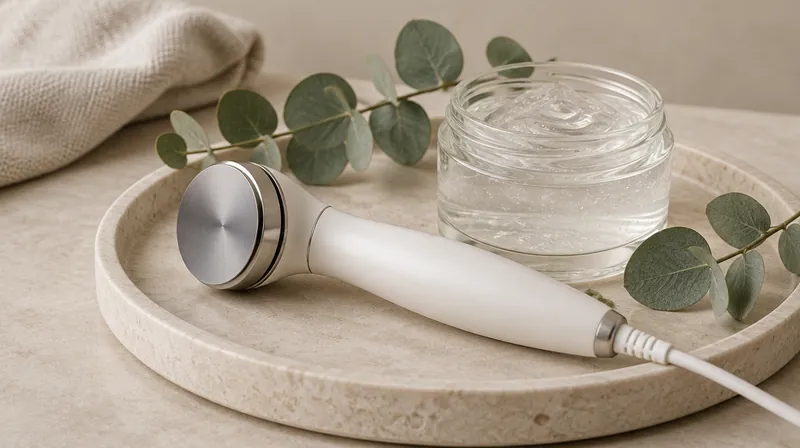
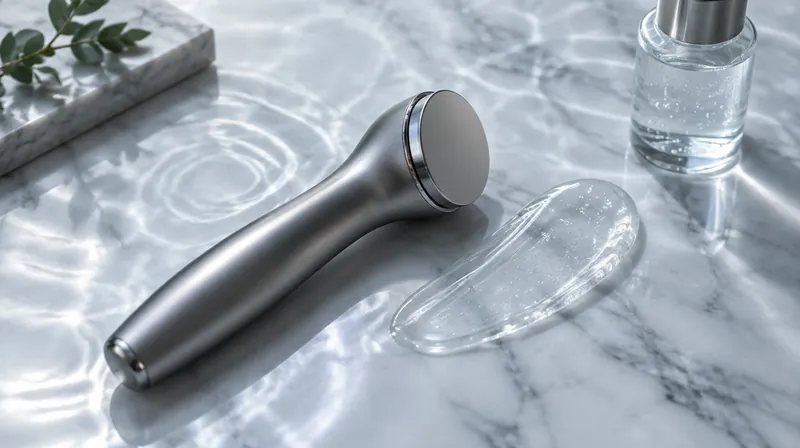
At-home ultrasound devices use low-intensity, non-focused sound waves through a gel. They’re used for a few minutes most days, are marketed for hydration, texture, absorption and a firmer look over time, and have a much smaller evidence base. They cost hundreds of dollars once. They are not HIFU and won’t give HIFU results.
Side-by-side
| At-home ultrasound | Ultherapy / HIFU | |
|---|---|---|
| Energy | Non-focused, low intensity, megahertz range | Focused to create small thermal points at set depths |
| Goal | Hydration, texture, absorption, firmer look over time | Tissue lifting and tightening |
| Who does it | You, at home | Trained provider in a clinic |
| How often | About 10–12 minutes, several times a week or daily | Usually a single session; some people repeat later |
| Sensation | Usually barely felt | Can be uncomfortable; providers may use pain control |
| Side effects | Uncommon with correct use | Usually mild and temporary (redness, swelling, bruising); rare serious events reported |
| Evidence | Ultrasound permeability research; mostly brand-run device studies | Clinical studies and expert consensus for authorized indications |
| FDA status | Several popular models are Class I listed (ISA). Not cleared | Ultherapy: De Novo (DEN080006); Class II focused-ultrasound category |
| Typical cost | $249–$1,100 one-off for the standalone handhelds we cover | RealSelf average $2,609 per treatment |
Device prices checked October 7, 2026; RealSelf figure from its Ultherapy cost page.
Focused vs non-focused energy
All ultrasound is sound above the range of human hearing. What matters for skin is focus, intensity and frequency. Ultherapy-style devices converge energy on tiny points beneath the surface, heating them enough to create small zones of coagulation that the body then remodels. FDA’s classification for this category describes focused ultrasound used “to produce localized, mechanical motion within tissues and cells for the purpose of producing either localized heating for tissue coagulation or for mechanical cellular membrane disruption” for non-invasive aesthetic use.
Home devices spread low-intensity energy over the area under the head. Frequency controls roughly how deep it acts: higher frequencies lose energy faster and act closer to the surface (StatPearls). That’s why multi-frequency devices combine, say, 1, 3, 10 and 19 MHz. None of them is designed to create the thermal points HIFU relies on.
What each can realistically do
Ultherapy / HIFU
A 2022 expert consensus describes Ultherapy as FDA-cleared to lift the soft tissue of the neck, under the chin and the brow, and to improve lines on the upper chest (Pavicic et al., 2022). Results develop over the months after treatment as tissue remodels.
At-home ultrasound
The best-established effect is sonophoresis: ultrasound can temporarily increase skin permeability, which is the basis for the “helps skincare absorb” claim (Azagury et al., 2014). The strongest permeability effects in that research come from low-frequency ultrasound below 100 kHz, so the size of the effect for a given home device is unknown (Mitragotri & Kost, 2004). Visible firmness and texture claims rest mostly on small, brand-run studies.
Safety and side effects
Focused ultrasound is powerful enough to cause harm when misused. Reported side effects are usually mild and short-lived, such as redness, swelling and bruising, but rare serious events, including blistering, ulceration and tissue atrophy, have been documented (Friedmann et al., 2018). That’s a key reason it belongs in trained hands.
Home devices are far lower in intensity. Use plenty of gel, keep the head moving, avoid the eyelids and broken or inflamed skin, and follow the manual’s contraindications.
How they’re regulated
FDA first authorized Ultherapy in 2009 through the De Novo pathway (DEN080006). Its category, “focused ultrasound stimulator system for aesthetic use,” is Class II with special controls (21 CFR 878.4590). Several popular home ultrasound handhelds, by contrast, are Class I listed under “massager, therapeutic, electric” (code ISA), which is exempt from premarket review. That is not clearance. For more detail, see FDA cleared vs listed vs Class I.
Cost over time
RealSelf members report an average Ultherapy cost of $2,609, with a range of about $1,000 to $5,000 depending on treatment area and location (RealSelf). Standalone home ultrasound handhelds in our guide range from $249 to $1,100, plus gel or ampoules. That doesn’t make them a cheaper substitute: they do different things. Some people use a home device as a gentle routine between, or instead of, clinic treatments, with realistic expectations.
What about “at-home HIFU”?
Some consumer gadgets are marketed as “HIFU” for home use. Be cautious. FDA’s focused-ultrasound aesthetic code (OHV) had 30 510(k) clearances when we checked, and we didn’t find any described as a home or over-the-counter device. If a product really focuses ultrasound to heat tissue, it’s attempting something that carries real risk without a trained operator. If it doesn’t, the “HIFU” label is misleading. Either way, ask the seller for its FDA status and K-number.
Which is right for you?
- Consider Ultherapy/HIFU if you have visible laxity in the brow, jawline or neck, want a lifting effect, and are comfortable with the cost and a consultation with a qualified provider.
- Consider an at-home ultrasound device if you want a gentle, regular routine focused on hydration, texture and absorption, and you understand it won’t lift like HIFU.
- Consider an FDA-cleared LED mask if you want the at-home technology with the most published evidence for fine lines. See the best LED masks.
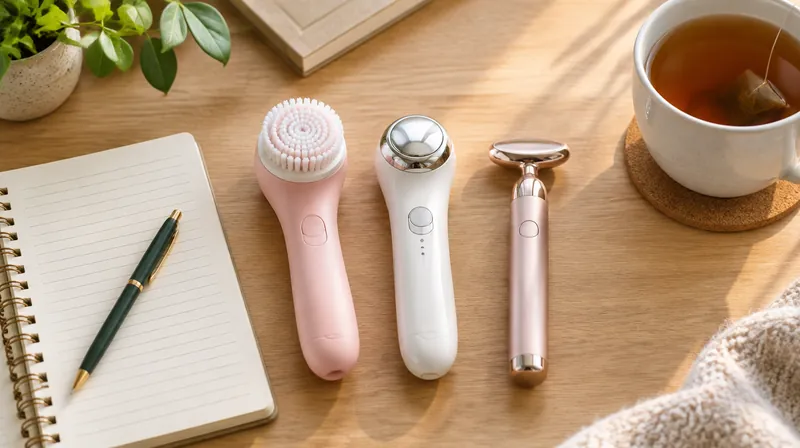
Our guide to at-home ultrasound devices compares models from Quadthera, THOME, glow.m and SENNEY, with each device’s FDA status and evidence stated plainly.
Frequently asked questions
Can an at-home ultrasound device replace Ultherapy?
Is at-home ultrasound safe?
Can I use an at-home device after Ultherapy?
How much does Ultherapy cost?
What is “LDM” and is it HIFU?
Sources
- FDA De Novo DEN080006 — Ulthera System
- 21 CFR 878.4590 — Focused ultrasound stimulator system for aesthetic use
- FDA product classification: OHV (focused ultrasound for tissue heat or mechanical cellular disruption) — 510(k) count checked via openFDA Oct 7, 2026
- Pavicic T, et al. Microfocused ultrasound with visualization: consensus on safety. J Cosmet Dermatol. 2022
- Friedmann DP, et al. Complications from microfocused transcutaneous ultrasound. Lasers Surg Med. 2018
- StatPearls: Ultrasound Physics and Instrumentation (NCBI Bookshelf)
- Azagury A, et al. Ultrasound mediated transdermal drug delivery. Adv Drug Deliv Rev. 2014
- Mitragotri S, Kost J. Low-frequency sonophoresis: a review. Adv Drug Deliv Rev. 2004
- RealSelf: How much does Ultherapy cost?
- 21 CFR 890.5660 — Therapeutic massager