Quadthera Titan vs Medicube AGE-R Booster Pro X2: Ultrasound vs Multi-Mode Booster
One is a $249 multi-mode K-beauty bestseller. The other is a $1,100 four-frequency ultrasound device. They target overlapping goals in very different ways. Here’s a fair side-by-side, starting with our relationship to one of them.
Our publisher, Dalmie LLC, sells Quadthera. We don't earn commissions from other links in this article. Disclosure.
Our relationship to Quadthera
Disclosure: GlowLab's publisher, Dalmie LLC, is a US retailer of Quadthera and may earn from sales. Learn more.Our publisher, Dalmie LLC, sells the Titan, which gives us a financial reason to favor it. So we’ve tried to be stricter with its claims than with Medicube’s, and we’ve stated plainly where Medicube is the better buy. Everything here comes from published specs, FDA records and published reviews. We haven’t run a hands-on comparison. See how we evaluate and our disclosure policy.
The short verdict
- Choose the Medicube AGE-R Booster Pro X2 if you want the best value, several technologies in one handset, no gel, and a quick same-day glow. For most people trying their first device, it’s the lower-risk purchase at less than a quarter of the price.
- Choose the Quadthera Titan if you specifically want ultrasound: a device you barely feel, with no electrical stimulation of the skin, the widest published frequency range among standalone handhelds we found, and a focus on hydration, texture and absorption. Choose it only if the price is comfortable. Its evidence is a small, brand-funded study.
- If evidence is your top priority, neither is the strongest choice. FDA-cleared LED masks have more research behind them. See the best LED face masks.
Side-by-side specs
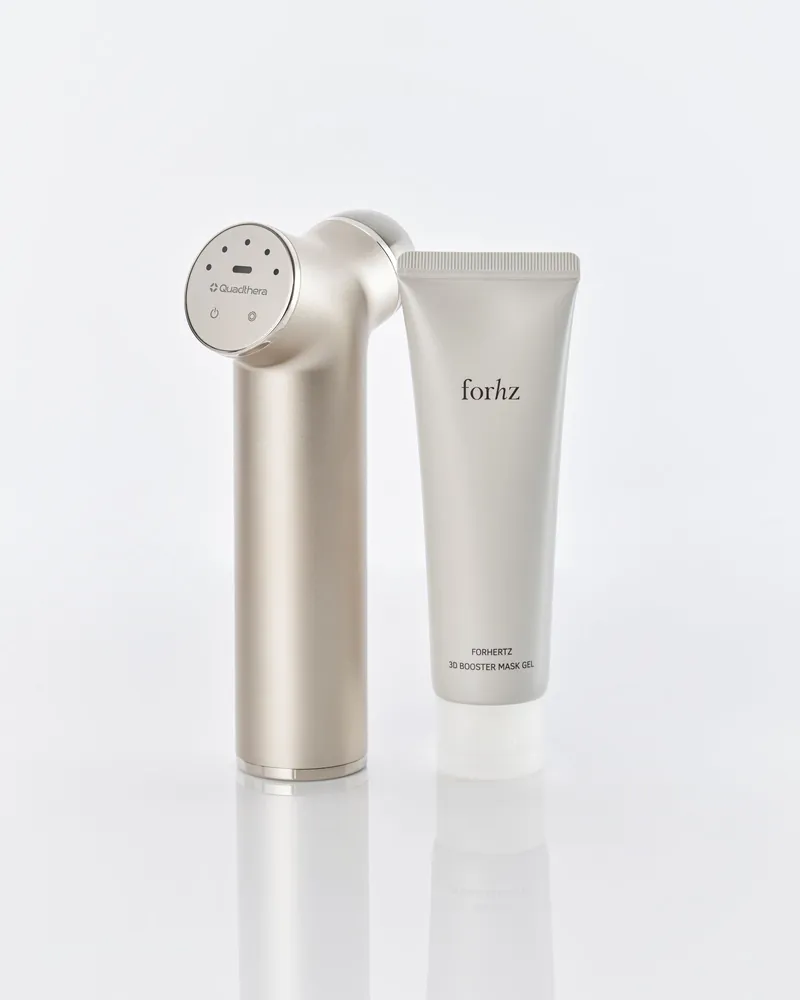
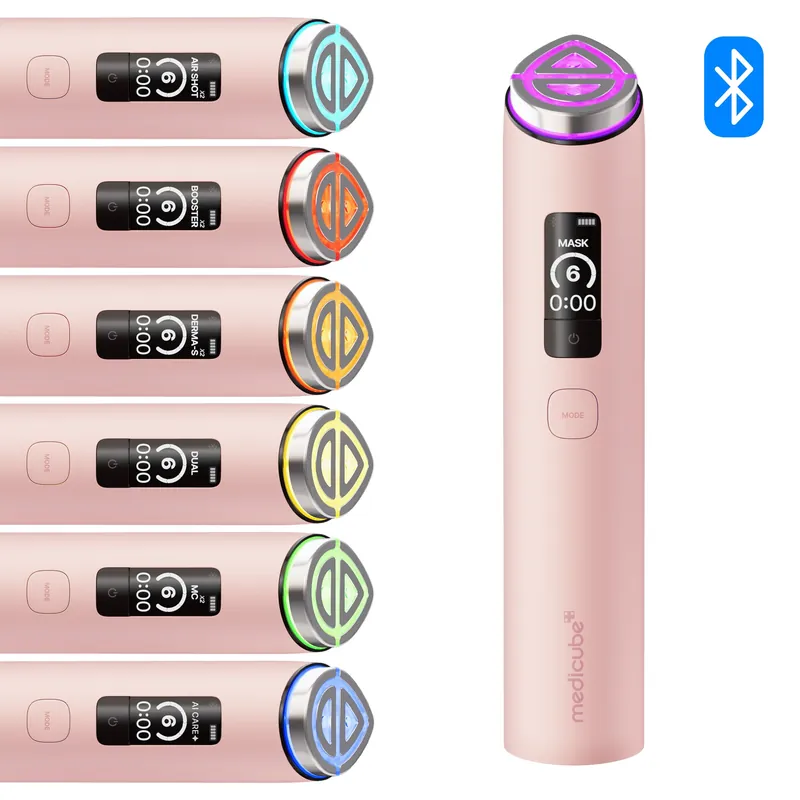
| Quadthera Titan† | Medicube Booster Pro X2 | |
|---|---|---|
| Core technology | Non-focused ultrasound at 1, 3, 10 and 19 MHz | Electroporation, microcurrent, EMS, “electric needles,” LED, sonic vibration |
| Modes | 5 (Booster, Calming, Firming, Glow, Q Mode); 2 intensity levels | 7 (Booster, Air Shot, MC, Derma Shot, plus AI, Dual and Mask modes) |
| Head | Titanium Grade 2 | Not specified; Medicube says it’s 1.3x larger than the original |
| Session | Up to 10 min; auto-off; pauses if held still | About 5 min per mode on the original model (Byrdie) |
| Glide medium | Water-based conductive gel (any brand, per Quadthera) | None; use over your skincare |
| Sensation | Barely felt; beeps during use | Some modes tingle; Air Shot can singe peach fuzz (BestReviews) |
| FDA status | Class I listing (ISA). Not cleared | Class I listing (ISA). Not cleared |
| Product-specific study | 4-week, 20-person evaluation (P&K Skin Research Center), brand-funded | Brand-cited test results; no published study found |
| Price seen | $1,100 with gel | $249 ($299 regular); $179 promotional listing also live |
| Warranty / returns | 1-year warranty, 30-day returns (Quadthera) | See Medicube’s policy |
† GlowLab's publisher, Dalmie LLC, is a US retailer of Quadthera and may earn from sales. Prices checked October 7, 2026.
How each one works
Medicube Booster Pro X2: many electrical modes in one
The Booster Pro family bundles several electrical technologies. “Booster” mode uses electroporation-style pulses marketed to help skincare absorb. MC mode is microcurrent, for a plumper, more defined look. Derma Shot is EMS, a stronger current that makes muscles contract. Air Shot uses “electric needles” for the look of pores and texture. LED and vibration round it out. The X2 adds AI, Dual and Mask modes. Medicube told Vogue and Marie Claire that the X2 has twice the output power and electrodes of the original. We haven’t verified those figures independently.
Quadthera Titan: one technology, several depths
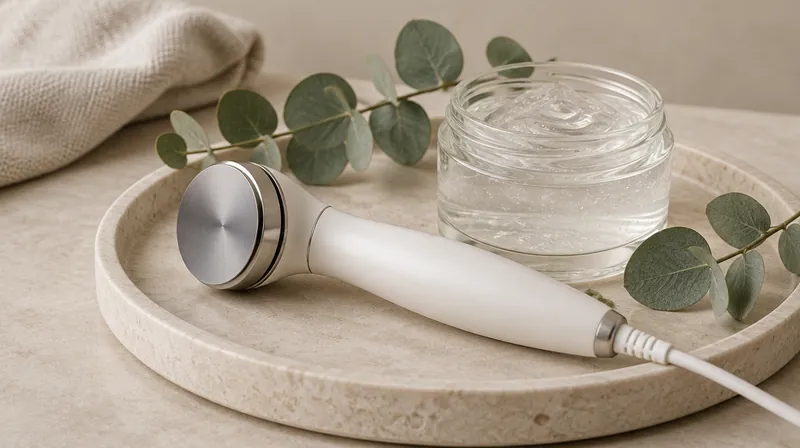
The Titan sends low-intensity, non-focused ultrasound into the skin through a gel layer. In ultrasound physics, higher frequencies lose energy faster and act closer to the surface, while lower frequencies reach deeper. The Titan’s modes combine frequencies for different goals; for example, Calming uses 1, 3 and 10 MHz, and Glow uses 10 and 19 MHz. Its main documented mechanism is sonophoresis, ultrasound’s ability to temporarily increase skin permeability, which is well established in drug-delivery research (Azagury et al., 2014). The strongest permeability effects in that research come from lower-frequency ultrasound than consumer devices use, so the size of the effect for any home device is unknown. Read our ultrasound explainer for details.
Daily use and feel
Medicube is quick to pick up: no gel, apply over your serum, choose a mode. Testers consistently describe an immediate glow. The flip side: running all modes takes about 20 minutes, some modes tingle, and BestReviews’ tester noticed a burning smell from Air Shot on peach fuzz (BestReviews; Byrdie).
Titan is a single 10-minute glide session with gel. It’s quieter on the skin: no current, no muscle twitch. The trade-offs are the gel step and the cleanup afterward. The device beeps at 5 and 10 minutes and pauses if you hold it in one spot.
Evidence and claims
Neither device has an independent, peer-reviewed, controlled trial that we could find.
- Medicube cites percentage improvements from testing by the “Global Institute of Dermatological Sciences.” We couldn’t find a published study to check. Hands-on reviews from CNN Underscored, Cosmopolitan, Byrdie and others report a same-day glow and a temporary firming effect, not lasting structural change.
- Quadthera (our publisher, Dalmie LLC, retails Quadthera) points to a 4-week, 20-participant evaluation by P&K Skin Research Center in Seoul using the Titan with the brand’s gel. It’s a real product-specific study, which is more than most devices have. But it’s small and brand-funded, and we haven’t seen a full public report or a sham control. Treat its reported improvements in firmness, pores and texture as promising, not proven.
Regulatory status
Both devices appear in FDA’s registration and listing database under product code ISA, “massager, therapeutic, electric,” a Class I category exempt from premarket review (21 CFR 890.5660). The Titan is listed under its Korean manufacturer, ECO DM LAB; the Booster Pro models under APR Co., Ltd. Neither is FDA-cleared, and FDA says registration “does not in any way denote approval” (21 CFR 807.39). More on that in FDA cleared vs listed vs Class I.
Price and running costs
The Booster Pro X2 costs $249 at Medicube’s US store (regular $299), and a $179 promotional listing was live when we checked. It needs no consumables beyond your normal skincare. The Titan costs $1,100 including gel. Quadthera says any water-based conductive gel works, so you aren’t locked into a proprietary refill; its own gel is $26. On upfront value, Medicube wins clearly.
Which should you choose?
| If you… | Lean toward |
|---|---|
| Want the lowest price or your first device | Medicube Booster Pro X2 |
| Want variety (absorption, microcurrent, EMS, LED) | Medicube Booster Pro X2 |
| Hate the gel step | Medicube Booster Pro X2 |
| Find electrical tingling uncomfortable | Quadthera Titan† |
| Have reactive skin and want the gentlest feel | Quadthera Titan† (patch-test first) |
| Specifically want multi-frequency ultrasound | Quadthera Titan† |
| Want the strongest evidence for fine lines | Neither: consider an FDA-cleared LED mask |
† GlowLab's publisher, Dalmie LLC, is a US retailer of Quadthera and may earn from sales.
A middle option
Disclosure: GlowLab's publisher, Dalmie LLC, is a US retailer of Quadthera and may earn from sales. Learn more.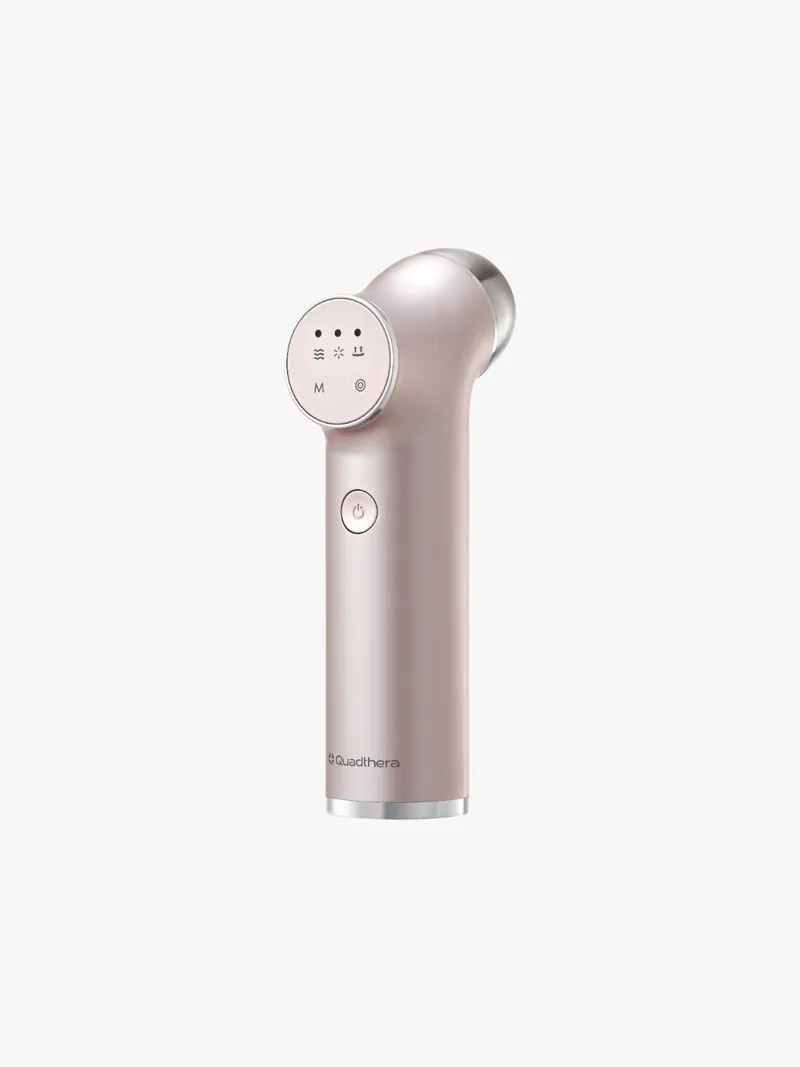
Quadthera’s smaller MiniTitan was on pre-order when we checked: 3, 10 and 19 MHz (no 1 MHz), three modes, a titanium head, listed at $399 with a $299.25 pre-order price. Quadthera says it ships by November 15. That puts it much closer to Medicube’s price, but it hasn’t shipped, so we’ll assess it later. Other mid-priced ultrasound options, such as THOME’s 3 + 10 MHz devices, are in our ultrasound guide.
More reading: Medicube Booster Pro review · LED vs microcurrent vs RF vs EMS vs ultrasound · best K-beauty devices.
Frequently asked questions
Is the Quadthera Titan better than the Medicube Booster Pro?
Does the Medicube Booster Pro use ultrasound?
Can I use both devices?
Is either device FDA-cleared?
Which is better for sensitive skin?
Sources
- Quadthera Titan product page (our publisher, Dalmie LLC, retails Quadthera)
- Quadthera FAQ (modes, gel, session) (our publisher, Dalmie LLC, retails Quadthera)
- Quadthera MiniTitan pre-order page (our publisher, Dalmie LLC, retails Quadthera)
- Medicube US: Booster Pro X2 product page
- CNN Underscored: Medicube Age-R Booster Pro review
- Byrdie: How do you actually use the Medicube Age-R Booster Pro?
- BestReviews: Medicube Age-R Booster Pro review
- Vogue: Medicube Booster Pro X2
- Marie Claire: Medicube Booster Pro X2 review
- FDA Establishment Registration & Device Listing database — Quadthera (ECO DM LAB) and Medicube (APR Co., Ltd.) listings under ISA, checked via openFDA Oct 7, 2026
- 21 CFR 890.5660 — Therapeutic massager
- 21 CFR 807.39 — Registration does not denote approval
- Azagury A, et al. Ultrasound mediated transdermal drug delivery. Adv Drug Deliv Rev. 2014