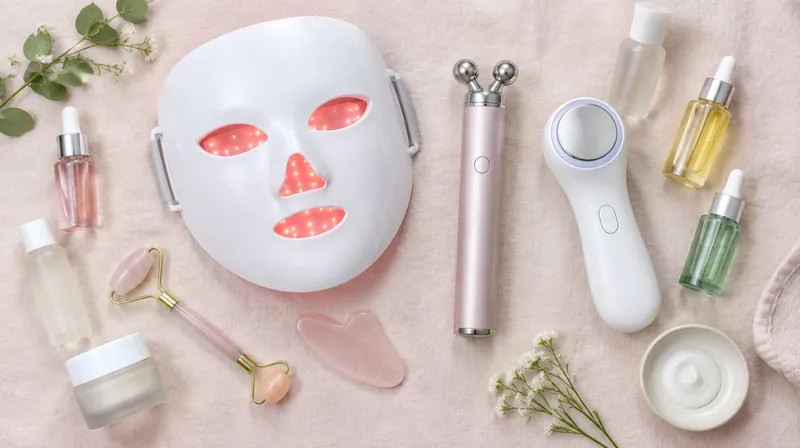
TechnologyLED masks and wands use red and near-infrared light (and sometimes blue light for blemishes). Of the at-home technologies we cover, red/near-infrared light has the most published clinical research behind it, although study quality varies and results are gradual.
TechnologyMicrocurrent devices pass a very low electrical current (measured in microamps) across the skin, usually with a conductive gel. They are marketed for a temporarily lifted, more defined look; device-specific published evidence is limited.
TechnologyRadiofrequency devices gently heat the deeper layers of skin to support firmness. In-office RF is well studied; home devices run at much lower energy, and a smaller number of home-use trials exist.
TechnologyEMS uses a stronger electrical current than microcurrent — strong enough to make facial muscles visibly contract. It is aimed at muscle tone rather than the skin surface.
TechnologyAt-home ultrasound devices use low-intensity, non-focused sound waves in the megahertz range, often switching between several frequencies. They are a different category from clinical focused ultrasound (HIFU/Ultherapy).
TechnologyMulti-function devices combine several technologies — for example microcurrent, EMS, electroporation and LED — in one handset. They trade depth in any one technology for convenience.